


Registered Voter Mailing List
The United States stands out as one of the few countries where democracy has been at the core of its governance from its very beginning. Unlike many nations, where the power to choose leaders has historically been confined to elites or monarchs, the U.S. system has always placed the responsibility in the hands of the citizens. American democracy operates on the principle that the people themselves decide, through voting, who will represent their interests at every level of government—local, county, state, and national. This decentralized process ensures that the voices of citizens are heard in the selection of their leaders, whether it’s a local mayor, a state governor, or the President of the United States. From its inception, the U.S. has distinguished itself with the inclusivity of its electoral system, allowing citizens to have a direct say in their governance.
At the heart of the American democratic process is the election, which is a massive, organized effort aimed at creating awareness, engaging the public, and ultimately selecting leaders. Political campaigns form the crux of this process, with candidates vying for public support by addressing various concerns, proposing policies, and making compelling arguments about why they should be entrusted with power. These campaigns unfold across a range of media, from traditional advertisements to social media platforms, all aimed at informing the electorate and mobilizing voters. Once the campaigns are complete, the election day arrives—an event that has evolved over time to ensure that every eligible citizen can participate in this fundamental democratic act.
In modern times, voting has been made more accessible than ever. While in the past, voting required physically traveling to polling stations during set hours, today, a significant portion of the U.S. electorate can vote through mail-in ballots. This shift has made the process more inclusive, accommodating a diverse range of voters. People with physical disabilities, for instance, no longer need to navigate potentially inaccessible polling places. Likewise, individuals who work long hours or have demanding schedules are not left out of the process. They can cast their ballots from the comfort of their homes, ensuring that they are not forced to choose between exercising their civic duty and preserving their livelihood. By expanding the ways in which Americans can vote, the system has made strides toward ensuring that everyone, regardless of their situation, has the opportunity to participate fully in the democratic process.
This flexibility is part of a broader trend toward greater inclusivity in American elections. Whether through absentee ballots, early voting, or the increasing use of digital platforms to spread awareness and facilitate engagement, the U.S. has worked to make sure that every eligible citizen has access to the vote. The U.S. electoral system is continuously adapting to meet the needs of a diverse population, ensuring that voting remains a right accessible to all, and reinforcing the central tenet of democracy: that the will of the people is the ultimate source of political authority. Through these ongoing reforms, America has set a global example for how to make democracy more inclusive and responsive to the needs of its people.
The democratic process in the United States is a dynamic, evolving system that is never truly at rest. While the nation may be between presidential elections, the wheels of democracy continue to turn through local, state, and congressional races, which are crucial in shaping governance. Even during the off years, various elections for governors, mayors, state legislators, and municipal officials remain active. The preparation for national elections is already underway, as the two major political parties gear up for an intense battle for the presidency, while independent candidates and movements add their voices to the conversation.
Sprint Data Solutions Worldwide Marketing has been a trusted partner to political organizations for many years, providing valuable support in keeping the democratic process moving smoothly. From collecting, managing, and updating key voter data to developing targeted marketing strategies, Sprint Data Solutions Worldwide Marketing plays an integral role in helping political campaigns engage voters effectively. As the nation begins to prepare for the next election cycle, Sprint Data Solutions Worldwide Marketing is once again poised to offer its expertise and services to political organizations, ensuring that their outreach efforts are optimized and that they have access to the most accurate, up-to-date data available. Whether it’s turning out voters for critical local elections or mobilizing the electorate for the presidential race, Sprint Data Solutions Worldwide Marketing remains committed to supporting democracy’s ongoing work with precision, reliability, and expertise.
About Sprint Data Solutions Worldwide Marketing
Sprint Data Solutions Worldwide Marketing was born from the vision of a disabled veteran who sought to make a meaningful contribution to the nation’s economy after years of dedicated military service. Having defended the country, the founder shifted focus from the battlefield to economic growth, particularly by helping businesses grow their customer base and, in turn, their revenue. From the very beginning, the goal was clear: to foster business expansion through the power of data-driven marketing. The founder chose to remain in Las Vegas, where the company began as a small, local operation. Despite the humble beginnings, the foundation of hard work, dedication, and quality results fueled steady growth. Today, the company is proud to be led by a loyal team with more than 50 years of combined expertise in the marketing and promotions sector.
Sprint Data Solutions Worldwide Marketing’s journey began in the world of direct mail marketing, long before the digital marketing revolution took hold. In its early days, the company specialized in collecting and managing mailing lists, focusing on names, addresses, and demographic data. The company’s growing expertise in database management, coupled with a commitment to precision, allowed it to provide clients with highly targeted marketing resources. These early efforts led to measurable success, further strengthening the company’s position in the marketing sector. As the business flourished, it was able to expand its operations beyond Las Vegas to cover the entire continental United States, eventually adding Alaska and Hawaii to ensure nationwide coverage.
As digital marketing gained momentum, Sprint Data Solutions Worldwide Marketing quickly adapted, incorporating online marketing strategies and services to complement its traditional direct mail offerings. This strategic pivot positioned the company to offer a comprehensive suite of marketing solutions. With a focus on data-driven insights, the company expanded into North America, serving businesses in Canada and Mexico, and later broadened its reach internationally. Today, Sprint Data Solutions Worldwide Marketing offers global access to key markets across Europe, including major hubs like France, enabling its clients to pursue marketing strategies that span the globe. This continuous evolution has ensured that Sprint Data Solutions Worldwide Marketing remains at the forefront of the marketing industry, delivering unparalleled value to businesses seeking effective, data-driven marketing solutions.
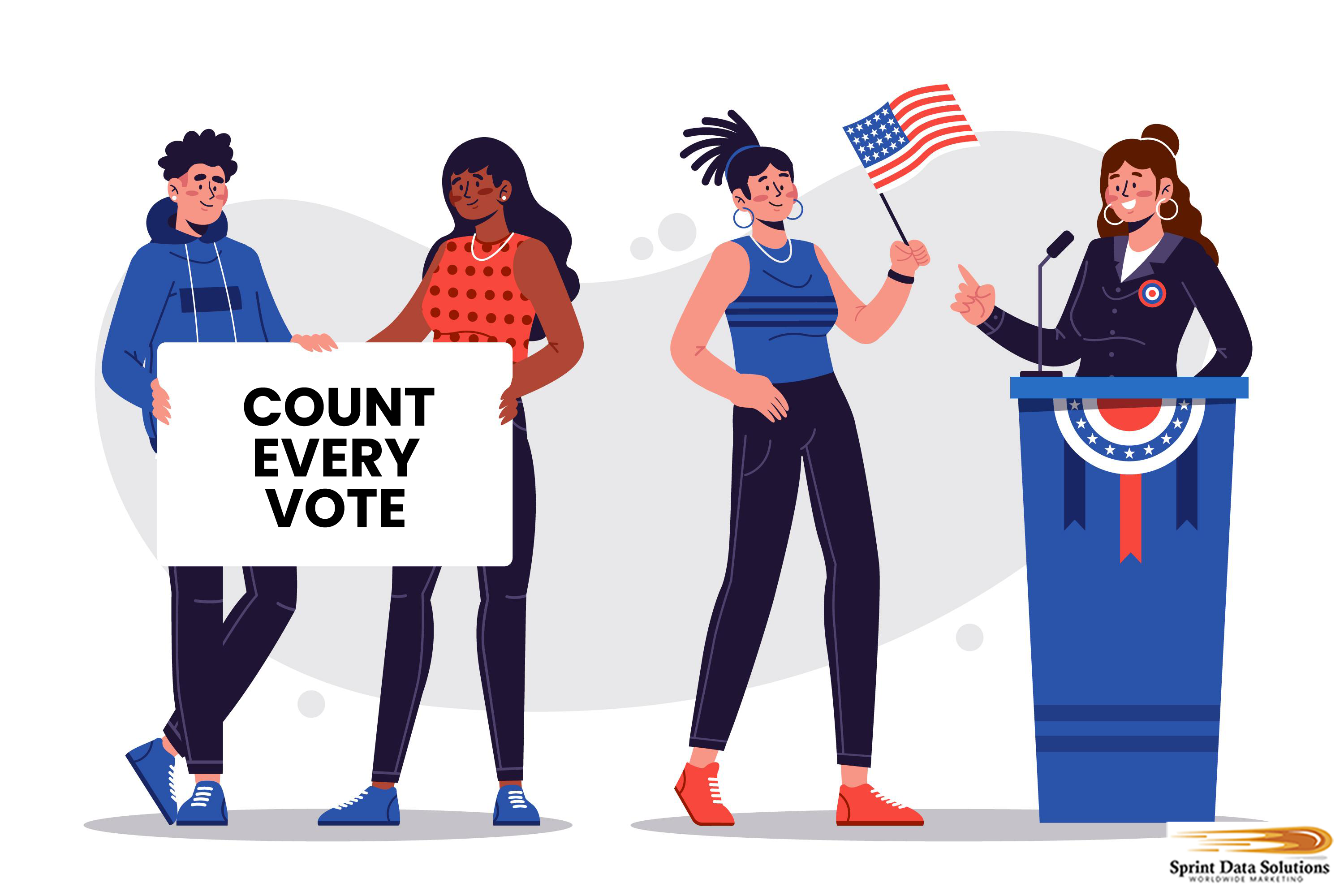
Elections Are Different In The New Millennium
The democratic process has undergone significant transformations over the years, particularly in how political candidates connect with voters. While the essential goals of campaigning remain unchanged—convincing voters that a candidate is the best person for the job—the methods by which candidates achieve these objectives have evolved dramatically. Traditionally, the focus was on personal engagement and direct communication with voters, but as technology has advanced, so too have the strategies and tools employed to sway public opinion.
In earlier times, before mass communication, campaigns were often based on face-to-face interactions. Candidates would travel to different parts of their constituencies, delivering speeches and engaging directly with voters to build trust and establish credibility. Print media, such as posters, leaflets, and pamphlets, supplemented these efforts by providing more detailed information about the candidate’s positions and background. The local nature of these early campaigns meant that candidates’ personal interactions were vital to their success, and it was through these relationships that their platforms were communicated.
The rise of radio in the early 20th century marked a turning point in the way campaigns were conducted. While in-person visits remained crucial, radio dramatically expanded the reach of a candidate’s voice. Speeches and interviews that once could only be heard by those present in the audience could now be broadcast to a much larger population, reaching voters across vast geographic areas. This new medium allowed candidates to communicate their ideas and positions in ways that had previously been impossible, effectively democratizing the distribution of political messages.
Television further revolutionized campaigning by adding a visual element to political communication. The visual medium enabled candidates to connect with voters on a more personal and emotional level, as viewers could now see and hear candidates speak. This created new opportunities for political advertising, with commercials targeting specific demographics and attempting to influence voters’ perceptions in a concise, impactful manner. The televised debate between John F. Kennedy and Richard Nixon in 1960 marked the beginning of a new era in political campaigning, where appearances, body language, and image played a critical role in shaping public opinion.
The advent of the Internet in the late 20th and early 21st centuries ushered in an even more profound shift in how campaigns were conducted. Digital platforms, particularly social media, have dramatically changed the way candidates communicate with voters. Candidates can now bypass traditional media outlets and connect directly with the electorate through platforms like Facebook, Twitter, Instagram, and YouTube. This direct communication allows for real-time interaction, with candidates able to respond quickly to emerging issues, share updates, and engage with voters on a more personal level than ever before.
Moreover, the Internet has opened new doors for data-driven campaigning. Political campaigns now leverage sophisticated analytics and voter targeting techniques to tailor their messages to specific groups of individuals, taking into account their interests, demographics, and past voting behavior. This hyper-targeting is designed to persuade voters more effectively by addressing their unique concerns and preferences, often through personalized ads and content. Additionally, crowdfunding platforms have become a critical component of modern political campaigns, enabling candidates to raise money directly from voters, reducing their reliance on traditional fundraising methods.
Despite these advances in technology, some elements of campaigning have remained consistent. Building a candidate’s personal legitimacy, presenting clear policy platforms, and making promises to enact meaningful change continue to be fundamental aspects of a successful campaign. However, the tools and tactics used to achieve these goals have become more sophisticated, and campaigns today are heavily reliant on the digital landscape, where information is more accessible, and public opinion can shift rapidly.
The evolution of political campaigning—from personal interactions to mass media, and now to digital strategies—demonstrates the adaptability of the democratic process. As new technologies continue to emerge, political campaigns will undoubtedly continue to evolve, offering new opportunities and challenges in how candidates connect with voters and persuade them to support their vision for the future.
With the rise of the Internet, political campaigning has undergone a profound transformation. The Internet’s ability to capture vast amounts of data has significantly enhanced the precision with which targeted marketing can be executed. Through various online channels, such as social media platforms, search engines, and even e-commerce websites, campaigns can collect detailed information on individual preferences, behaviors, and demographics. This data is continuously updated and refined, allowing organizations to build comprehensive profiles of potential voters or customers. From membership sign-ups to online purchases and website visits, each interaction provides valuable insights into a person’s interests, values, and lifestyle choices.
These profiles enable campaigns to tailor messages more effectively than ever before, ensuring that each piece of content reaches its intended audience in the most personalized way possible. For instance, data gathered from search behavior or social media activity can predict voter preferences, helping campaigns deliver highly relevant and persuasive content. Moreover, the widespread use of smartphones and other portable devices has revolutionized the way individuals consume information. Unlike traditional broadcast media, which required audiences to tune in at a set time or on a specific channel, the Internet offers unparalleled flexibility. Content can be accessed at any time, from virtually any location, making it easier for campaigns to engage with potential supporters or donors whenever they are most receptive.
The sharing and exchange of data across different platforms and organizations has further amplified the scope of marketing efforts, enabling even greater targeting accuracy. Companies and political campaigns can now access vast networks of third-party data to refine their strategies and ensure that every interaction is both timely and relevant. This shift has not only made political campaigns more sophisticated but also drastically reduced the costs associated with reaching specific voter segments, offering a more efficient and scalable approach to engagement. Ultimately, the Internet’s impact on campaigning has transformed it into a highly data-driven, on-demand operation, where content can be continuously optimized for maximum impact.
Who Benefits
Sprint Worldwide Solutions Marketing offers an expansive collection of targeted lists tailored to a wide range of sectors, including consumers, businesses, and various organizations. These lists are meticulously curated to provide comprehensive contact details, enabling precise outreach for a multitude of marketing needs. Additionally, the company’s offerings extend to the political domain, where the lists encompass not only individuals but also potential political actions and key influencers. These political databases are instrumental for targeted campaigns, voter engagement, fundraising, and issue-based advocacy, making them invaluable resources for political organizations. Whether for grassroots mobilization, advocacy campaigns, or direct outreach to decision-makers, Sprint Worldwide Solutions Marketing ensures that their lists offer both depth and specificity, ensuring high-quality data that drives effective, results-oriented marketing strategies. Some of the lists available include:
Registered Voter Mailing Lists
The foundation of American democracy lies in the individuals who choose to participate in the electoral process by registering to vote. Voter registration is a key step in exercising the right to vote, and the requirements vary depending on the state. In some states, individuals are required to register before Election Day, while others offer same-day registration, allowing eligible citizens to register at the polls.
One key aspect of voter registration is that it typically includes a declaration of political affiliation, although not all states require it. Voters may choose to register as Republicans, Democrats, Independents, or even decline to state a party preference. While political affiliation can influence the type of communication a voter may receive, the critical point is that these individuals have taken the initiative to register and actively engage in the democratic process. This commitment to being involved in the political system elevates them as an important audience for political marketing efforts.
These registered voters represent a diverse group, but they share a common factor: they have expressed their willingness to participate in elections, making them highly receptive to political messaging. Their engagement in the democratic process, whether by voting or simply being registered, positions them as a valuable demographic for targeted outreach and political advertising. Voters are not only essential for democracy but also for the strategic success of political campaigns, making their engagement a crucial aspect of effective political marketing.
State Voters Mailing Lists
While the presidency undoubtedly attracts the most attention in the United States, the elections at the state level are often the ones that have a more immediate and tangible impact on people’s daily lives. State elections encompass a wide range of positions, from the governor and state legislators to state supreme court justices, and each role plays a significant part in shaping the policies that directly affect residents. State-level decisions influence key aspects of life, such as education, healthcare, transportation, taxes, and criminal justice reform, making these elections critical for voters.
Voter participation in state elections is vital because the policies enacted by state governments can have a more direct and lasting effect than federal laws. For instance, decisions regarding public schooling, Medicaid expansion, local infrastructure, and even state-level economic strategies are all influenced by state officials. Furthermore, state governments often have the power to regulate industries and services that residents interact with daily, such as utilities, real estate, and local businesses. As such, the individuals elected to these positions have substantial control over both local and regional matters.
For political campaigns, reaching out to voters at the state level is essential to highlight the stakes involved. State elections are not only about choosing candidates but also about shaping the trajectory of local policies that impact every aspect of daily life. A successful campaign can influence not only voter behavior but also the way states approach critical issues. Therefore, explaining the candidates’ positions on these important matters and how their success or failure could affect state residents is crucial for mobilizing voters and ensuring a well-informed electorate. By engaging with voters on these issues, campaigns can help voters understand the direct consequences of their choices in a state election.
National Voter Mailing Lists
In political marketing, especially for larger-scale elections like the U.S. Presidency, the objective often shifts toward reaching a broad, diverse audience across the entire country. For these types of elections, national voter mailing lists become invaluable tools, as they allow campaigns to target millions of potential voters. These lists can be meticulously curated, containing not just basic voter data but also crucial demographic and psychographic details that help refine outreach efforts. The ability to segment by key factors such as age, political affiliation, geographic location, voting history, and even consumer behavior ensures that the messaging resonates with the right people. Moreover, these lists can be enhanced with additional information, such as household income, education level, and previous support for specific causes, enabling campaigns to personalize their messaging and increase engagement. This type of marketing is not only crucial during major elections but also for any political campaign with national or federal-level implications, where the goal is to ensure that messages are effectively conveyed to the widest possible audience.

Voter Precinct Mailing Lists
Voting precinct mailing lists play a pivotal role in political campaigns and grassroots political activities, as they provide an in-depth view of eligible voters within specific geographical areas or subdivisions of an electoral district. These lists are critical because they allow political campaigns to target voters in a more personalized and focused way. By having access to the contact information of individuals who are eligible to vote in a particular precinct, political organizations can craft messages that resonate with the local population, ensuring that campaign efforts are not wasted on irrelevant demographics.
In every type of election, from local to national, knowing who resides within each precinct and having detailed data on these voters—such as their political preferences, voting history, and other demographics—greatly enhances the efficacy of outreach efforts. With these insights, campaigns can tailor their messages, mobilize volunteers effectively, and run targeted advertising campaigns to increase voter turnout and engagement. Precinct mailing lists also enable more precise canvassing and volunteer recruitment, ensuring that each voter is contacted through the most efficient channel, whether it be direct mail, phone calls, or door-to-door outreach.
For political action groups, access to these lists becomes a crucial resource not just for traditional election campaigns, but also for advocacy efforts, petition drives, or efforts to sway public opinion on specific legislative issues. Additionally, having this data allows for strategic decision-making about where to focus resources and where additional outreach may be necessary, making precinct mailing lists an indispensable tool in political strategy. The ability to precisely target and connect with voters within specific precincts maximizes the impact of political messaging, turning voter data into one of the most valuable assets in the campaign toolbox.
Political Donor Mailing List
Beyond the act of voting, which is a cornerstone of democratic engagement, some individuals feel a deeper sense of responsibility to contribute to political causes by providing financial support. Political campaigns, especially those that gain national attention or aim to bring about significant change, require substantial funding. This is where the financial support of donors becomes indispensable in ensuring that candidates and causes can effectively reach voters and compete in the high-stakes arena of modern politics.
Donors come from diverse backgrounds and various economic strata. While large donors—typically from wealthier backgrounds—can make substantial contributions, this does not mean that individuals in lower and middle-income brackets are any less influential. In fact, smaller donations, when aggregated, can have a meaningful impact. Many Americans, even those who may not have significant disposable income, still see the value in supporting candidates or causes that resonate with their values and vision for the country. These donors are often motivated by the belief that their contributions, no matter how modest, can help amplify the message of the candidate or cause they are passionate about.
On the other hand, middle-class and affluent individuals are also major contributors to political campaigns, although often for different reasons. While many of these individuals donate out of genuine belief in a candidate or cause, others may see their financial contributions as a way to support policies that align with their personal or business interests. The motivations of higher-income donors can range from a desire to support candidates who advocate for fiscal policies that benefit them or their industry, to a long-term investment in shaping government decisions that align with their political philosophy. For the wealthy, donations can serve as a strategic tool, offering them both a sense of civic duty and a potential influence over public policy decisions.
Whether small or large, every donation plays a critical role in ensuring that candidates and political movements have the necessary resources to engage voters, communicate their message, and ultimately compete in elections. The intricate interplay of motivations behind political donations reflects the dynamic relationship between money and politics, where financial support often goes hand-in-hand with an individual’s hopes for the future direction of government policy.
Conservative Political Donors
In any political landscape, the relationship between donors and political parties is a key driver of campaign funding and support. In the United States, the conservative donor base is primarily aligned with the Republican Party. This group tends to prioritize causes that reflect traditional conservative values, such as advocating for less government intervention in the economy, promoting religious freedoms, supporting Second Amendment rights, and favoring stricter immigration policies. Additionally, conservative donors often rally around issues like pro-business policies, individual liberties, and national security. These donors typically look for political candidates and organizations that share their vision for the country’s future, often focusing on preserving the nation’s cultural and social fabric.
For those involved in political activities that resonate with conservative ideologies, such as campaigns or causes that align with these values, conservative donors represent a critical resource. Especially during high-stakes political events like election cycles, these donors play a crucial role in funding initiatives that seek to influence policy decisions or sway public opinion. Because conservative donors tend to be highly engaged and passionate about the issues they care about, their financial contributions are often tied to specific actions, such as lobbying for more religious freedom, opposing policies perceived as too liberal, or supporting candidates who advocate for lower taxes and stronger borders. With this consistent support, political campaigns and advocacy groups can more effectively advance their causes, making conservative donors an indispensable part of the political landscape.
Liberal Political Donors
Liberal political causes, much like their conservative counterparts, often find strong support within the Democratic Party, as these causes align with progressive values that champion equality, social justice, and government intervention to address systemic issues. Over the years, these causes have not only maintained a firm presence within the American political landscape but have grown in significance and activism, especially in response to recent political shifts. Liberal causes advocate for a range of issues, including women’s rights, LGBTQ+ protections, climate change action, affordable healthcare, and education reform.
These causes are deeply embedded in American society, driven by a diverse coalition of grassroots organizations, activists, and political donors. The repeal of Roe v. Wade in 2022 has significantly mobilized supporters of reproductive rights, with a surge of donations directed toward political groups and organizations advocating for abortion access. This action has galvanized many within the liberal base, who view it as a direct attack on women’s autonomy and human rights. Similarly, issues such as transgender rights, racial justice, environmental sustainability, and affordable housing continue to inspire political engagement, resulting in substantial financial contributions to advocacy groups fighting for progressive policies.
In recent years, political donors have become more actively involved, not only in national elections but in state-level battles, where many key issues are being decided. Increased activism in response to the perceived rollback of civil liberties has led to the formation of new political action committees (PACs) and grassroots efforts that fund candidates, policy initiatives, and legal challenges. The recent rise in liberal political engagement reflects a growing concern over the protection of fundamental rights, emphasizing the importance of electing officials who share these values.
Liberal donors and political groups have found a unique opportunity to push back against the current political climate, especially with the increasing challenges to established protections for marginalized groups. In addition to funding campaigns and lobbying efforts, contributions often go toward educational initiatives, media outreach, and social justice movements aimed at broadening public awareness and pushing for systemic reforms. With a high level of political engagement among younger voters, many of whom feel an urgent need for action, liberal causes have solidified their place as critical forces shaping the future of American politics.
Independent Voter Mailing List
In the United States, the majority of voters tend to align themselves with one of the two dominant political parties, identifying with either the Democratic or Republican platforms. However, there is a significant portion of the electorate that rejects strict party affiliation and instead identifies as independents. These voters, often disillusioned with the traditional party system, make decisions based on specific policy positions rather than party loyalty. They are particularly motivated by the issues that matter most to them, such as healthcare, education, or environmental concerns.
Independent voters can be a powerful force in elections, even though they may not participate in party-specific processes like nominating a presidential candidate. In many cases, their votes can swing elections, especially in battleground states or local elections where their numbers are substantial. These voters are often more discerning and less likely to vote along party lines, making them crucial targets for campaigns seeking to appeal to policy rather than ideology.
Additionally, independent voters can have a significant impact in the realm of political donations. They are often more selective about the causes they choose to support, donating to candidates or initiatives that align with their personal values and concerns. For political organizations and campaigners, engaging this group requires a focus on policy discussions and a demonstration of alignment with the issues that matter most to these voters. Understanding their concerns and reaching out with tailored messages that resonate with their ideologies is essential for garnering their support and, ultimately, influencing their voting behavior and contributions.
Undecided Voters Mailing List
Undecided voters represent a crucial demographic in elections, often playing a decisive role in determining the outcome of hotly contested races. These voters are not apathetic or disengaged; rather, they are individuals who actively participate in the election process but have yet to make a final decision on where to place their vote. While it may require more targeted efforts, persuasive arguments, and effective communication strategies to sway an undecided voter, the potential rewards are significant. In many cases, the shift of even a small percentage of undecided voters can tip the balance in an election that appears evenly matched or contentious. Historically, elections have demonstrated that those who are on the fence can ultimately become the deciding factor in close races, making it essential for campaigns to invest time and resources into engaging and informing this group. Undecided voters may weigh a variety of factors, including policy stances, candidate personalities, and current events, making them highly responsive to well-crafted messaging that resonates with their concerns. Therefore, identifying, understanding, and engaging undecided voters can be the key to achieving victory, especially when the race is too close to call.
Political Activists Mailing Lists
Political activists play a pivotal role in shaping the direction of political movements, often going far beyond the traditional means of participation such as voting or making financial contributions. These individuals are driven by a deep passion for their causes, and their contributions can take many forms, all of which are integral to driving change and influencing public opinion. Their commitment is typically rooted in a strong belief in a particular ideology or social issue, and they are willing to dedicate significant time, energy, and resources to furthering that cause.
One of the most impactful contributions of political activists is their involvement in campaign work. From canvassing door-to-door to rallying support through digital platforms, activists help spread awareness and generate enthusiasm for political candidates or causes. Their personal connections within their communities can also help to build trust and mobilize others who may be less engaged. Many activists also serve in administrative roles, helping to organize events, manage volunteers, and ensure that campaigns run smoothly and efficiently.
In addition to traditional campaign work, political activists often play an essential role in protests, demonstrations, and social movements that aim to bring attention to issues or challenge existing systems of power. Their willingness to engage in direct action—whether it’s through peaceful demonstrations or more dramatic public displays—can serve as a catalyst for broader public discourse. These actions not only highlight the urgency of their cause but also encourage others to take a stand, creating a ripple effect that can influence policy decisions and public perception.
Political activists are also invaluable in times of crisis, such as during contentious elections or moments of social upheaval. Their ability to mobilize quickly and effectively, whether through organizing protests, advocating for policy change, or simply raising awareness, can have a profound impact on the political landscape. By investing their time and energy into causes they believe in, activists contribute to the health of democracy by holding leaders accountable, fostering public debate, and ensuring that marginalized voices are heard.
Ultimately, political activism goes far beyond mere financial contributions. It is a powerful force that thrives on the energy, dedication, and passion of individuals who are willing to put their principles into action. These activists not only contribute to the success of political campaigns but also play a critical role in pushing societal boundaries, advocating for justice, and ensuring that political systems remain responsive to the needs and concerns of the people they serve.
Swing State Voters
Swing states, often referred to as battleground states, play an essential role in determining the outcome of presidential elections in the United States. These states are unique in that they do not consistently lean toward one political party and can swing either way based on the political climate, candidate appeal, and a variety of other factors. Unlike states such as California, which are reliably Democratic, or Texas, which is generally Republican, swing states have the potential to be won by either major party, making them the primary focus of political campaigns.
The importance of swing states cannot be overstated, as they often hold the key to securing the necessary Electoral College votes to win the presidency. Historically, a small number of states—such as Florida, Pennsylvania, Michigan, Wisconsin, and Ohio—have been considered critical in determining election outcomes. These states tend to be highly competitive, with voters closely divided between the two main political parties. As a result, candidates dedicate significant time and resources to campaigning in these areas, tailoring their messages to appeal to the diverse electorate and addressing the specific concerns of voters in these states.
In addition to the swing states themselves, understanding the demographic and psychographic makeup of voters within these states is crucial. Factors such as income, education, age, and key local issues all contribute to the voting patterns that can shift during an election cycle. The ability to access up-to-date, accurate databases of swing state voters is invaluable for targeting these areas effectively. High-quality databases allow campaigns to pinpoint likely supporters, tailor messaging, and strategize outreach efforts to maximize voter turnout.
Furthermore, the political dynamics in swing states can evolve rapidly, influenced by national issues, candidates’ platforms, and changing voter sentiments. Therefore, it is imperative for political campaigns, interest groups, and advocacy organizations to have access to constantly updated voter databases. Data analytics can help identify trends, spot emerging issues, and adjust strategies in real-time, ensuring that every dollar spent and every campaign ad placed has the maximum impact.
With swing states being the battleground for presidential elections, the strategic importance of having robust, targeted databases cannot be overstated. Effective data management and outreach can make the difference between victory and defeat, emphasizing the need for meticulous research, accurate voter information, and a deep understanding of each state’s unique political landscape.
A New Election Is Coming
The next U.S. presidential election is set for November 2024, but for political campaigns, the clock is already ticking. While nearly two years remain, seasoned political organizations understand that the key to a successful campaign lies in early and thorough preparation. The sooner the groundwork is laid, the more time campaigns have to build effective strategies, refine messaging, and develop a robust outreach plan. Early planning allows for a targeted, data-driven approach that resonates with voters, allowing candidates to secure critical support in every district across the country. At Sprint Data Solutions Worldwide Marketing, we are primed to offer a strategic advantage through our comprehensive multichannel voter contact solutions. We provide access to highly detailed voter data across every U.S. district, enabling campaigns to reach the right voters with the right message at the right time. Whether through direct mail, email, phone outreach, or SMS, we help ensure that campaigns can connect with the electorate effectively, build a strong voter base, and position themselves for success when the election finally arrives. With our precise and reliable data, campaigns can engage constituents across multiple touchpoints, creating personalized connections that drive higher engagement and support.
Reach The Groups You Need
Sprint Data Solutions Worldwide Marketing possesses an extensive collection of voter and political contacts that offer far more than just basic contact details. This database is enriched with valuable demographic information, which has been meticulously gathered through various means such as surveys, purchase actions, and mailing lists. By utilizing advanced big data analytics, this information can be categorized and cross-referenced to create highly targeted voter segments. This allows political candidates and organizations to precisely identify and reach the voters who align with their campaign objectives.
The data covers a wide range of demographic characteristics, making it possible to segment voters by numerous factors, such as age, gender, income, education level, political affiliation, and geographic location. Additionally, this information can be further refined by interests, values, and voting history, allowing for the development of a comprehensive voter profile. Through this targeted approach, campaigns can tailor their messaging, outreach, and engagement strategies to specific voter segments, increasing the likelihood of successful voter mobilization and support.
By leveraging technology, research, and data compilation, candidates gain access to a powerful resource that enables them to make data-driven decisions and optimize their political outreach efforts. This approach helps political organizations identify key voter demographics, track shifts in public opinion, and ultimately maximize the impact of their campaigns.
- Ethnicity
- Age
- Children’s Age
- Debt
- Homeowner
- Renter
- Marital Status
- Income
- Veteran Status
- Geography
- Mortgage Data
And more.
At Sprint Data Solutions Worldwide, we understand that in today’s fast-paced political landscape, access to accurate and comprehensive voter information is key to effective campaign strategies. Our voter lists go beyond just physical mailing addresses and include contact details through multiple channels, such as mail, email, SMS/text messaging, and phone numbers. Whether you’re looking to reach potential voters, engage with activists, or connect with donors, we provide highly targeted, customizable voter mailing lists tailored to various demographics. Our extensive database includes valuable insights on voter preferences, party affiliation, volunteer activity, and donation history, ensuring your campaign messaging reaches the right people at the right time. With Sprint Data Solutions Worldwide, you can optimize your outreach efforts, increase voter engagement, and enhance your chances of success in any election. Let us help you build a strategic advantage with data-driven, targeted marketing solutions for your political, volunteer, or fundraising campaigns.